Interdisziplinäre Online-Vortragsreihe: Border Realities
Border Realities: Borderlands and the Americas
Die Ausgabe 2026/2027 der Online-Vortragsreihe „Border Realities” befasst sich mit den sich wandelnden Grenzräumen Amerikas vor dem Hintergrund geopolitischer, gesellschaftlicher und ökologischer Veränderungen. Von der Grenze zwischen den USA und Mexiko über die Grenze zwischen den USA und Kanada bis hin zu Grönland und der Arktis werden diese Grenzräume auf dem amerikanischen Kontinent zunehmend durch Migration, indigene Souveränität, Klimawandel, Rohstoffgewinnung, Sicherheitsregime und sich verschiebende globale Machtverhältnisse geprägt.
In der Vortragsreihe kommen Wissenschaftler:innen aus den Border Studies, der Geographie, der Politikwissenschaft, der Anthropologie, den Indigenous Studies und den Environmental Humanities zusammen. Im Mittelpunkt steht die Frage, wie sich durch diese Entwicklungen gegenwärtige Grenzrealitäten verändern und Grenzen als gelebte Räume, Kontaktzonen und Orte gesellschaftlicher Auseinandersetzungen neu konfigurieren.
Die Vortragsreihe, die sich auf Grenzräume in Amerika fokussiert, eröffnet neue Perspektiven auf einige der drängendsten Herausforderungen unserer Zeit. Zugleich verdeutlicht sie die anhaltende Bedeutung von Grenzräumen als Orte der Begegnung, des Konflikts, der Widerstandsfähigkeit sowie neuer Möglichkeiten.
Thematische Schwerpunkte:
- Migration, Mobilität und Grenzgovernance an der Grenze zwischen den USA und Mexiko
- Indigene Souveränitäten und grenzüberschreitende indigene Nationen
- Die Grenze zwischen den USA und Kanada im Wandel geopolitischer Kontexte
- Grönland, die Arktis und neue geopolitische Entwicklungen
- Klimawandel und ökologische Veränderungen in Grenzregionen
- Rohstoffgewinnung, Energiewende und Umweltgerechtigkeit
- Grenzsicherheit, Überwachung und Militarisierung
- Wasser, Flüsse und grenzüberschreitende Umweltgovernance
- Grenzkulturen, Identitäten und Gemeinschaften
- Dekoloniale Perspektiven auf Grenzen und Grenzziehungsprozesse
- Kulturelle Repräsentationen und Grenzimaginationen
- 17/11/2026 | 17:00 Uhr (CET) und 10:00 Uhr (CST) – Benjamin Hoy (University of Saskatchewan)
Irregular Justice: Kidnapping, Extradition, and Power on the Canada–U.S Border
Borders divide jurisdictions, but the countries that create them often blur, ignore, or get around them. This presentation will examine how Canadian and American authorities brought fugitives to justice across the international line during the nineteenth and early twentieth centuries. Extradition was slow and limited, so police and soldiers on both sides used informal prisoner exchanges and cross-border kidnappings instead. Courts and governments tolerated these practices as a necessary part of policing a shared borderland.
Over time, these rulings became lasting legal precedents that still shape individual rights and state power. The presentation will show how “irregular justice” moved from a mostly reciprocal arrangement to an increasingly one-sided one. By making redress depend on diplomatic discretion rather than legal obligation, the courts tied cross-border justice to the balance of power between nations. Border control changed from a shared responsibility into a tool for asserting national power.
Benjamin Hoy is an Associate Professor of History and the director of the Historical GIS Lab at the University of Saskatchewan. He has published on a wide range of topic including Indigenous history, borderlands, game-based learning, and extradition policy. His first book, A Line of Blood and Dirt: Creating the Canada-United States Border across Indigenous Lands, examined the creation and enforcement of the Canadian-United States border between 1775 and 1939 and its impacts on the Indigenous residents whose land the border was created across.
Registration here
- 8/12/2026 | 17:00 Uhr (CET) und 10:00 Uhr (CST) – Maria Amelia Viteri (University of Maryland; UniGR-CBS Fellow 2026)
Unarchiving Borders: Embodied Memories, Territories, and Belonging
What gets preserved as “the border” in official archives, maps, migration regimes, and institutional narratives—and what becomes visible when we turn to embodied memory, affect, gesture, storytelling, and lived experience? Drawing on my work with Desbordes and The Body as Archive, this talk approaches borders not only as geopolitical lines or institutional regimes, but as lived and embodied formations: borders that are remembered, carried, negotiated, and sometimes exceeded through the body.
I explore practices of unarchiving that attend to forms of knowledge that may not appear in official records—embodied memories, affective traces, stories, movements, and intimate relationships to territory and belonging. From a decolonial perspective, the body becomes an active archive that can unsettle what is recognized as knowledge, whose memories become legible, and how borders themselves are remembered and reproduced.
Dr. María Amelia Viteri is a sociocultural anthropologist and applied social scientist whose research explores migration, borders, gender, identity, memory, and belonging. She holds a Ph.D. in Cultural Anthropology from American University and is affiliated with the University of Maryland, College Park, as an Associate Researcher in Anthropology. Her current project, The Body as Archive, explores the intersections of archival research, embodied memory, and sensory ethnography, drawing on her family’s history during the Holocaust. She is the author of several books, including Desbordes, which examines migration, borders, identity, and social difference, and her most recent book, The Tropical Silk Road (La Ruta de la Seda).
Registration here
- 12/01/2027 | 17:00 Uhr (CET) und 10:00 Uhr (CST) – Glenn Iceton (University of New Brunswick)
Regulating Humans and Animals in the Yukon-Alaska Borderlands
During the late nineteenth and early twentieth centuries, wildlife was central to the livelihoods of both Indigenous and settler populations living in the borderland region between Alaska and the Yukon. The centrality of wildlife revolved around the interplay between these established borders, the mobility of both animals and humans, the northern environment, and the application of law.
In the years following the Klondike Gold Rush, Yukon and Alaskan administrators introduced wildlife legislation designed to regulate hunting and trapping activities. However, enforcing these laws proved challenging in areas that lay beyond the gaze of the state. While important transportation corridors appear to have been well monitored, much of the border lacked surveillance due to the challenges the northern environment posed to effective travel through the region. The mobility of both humans and animals across this inconsistently patrolled borderland further complicated enforcement.
Recognizing the limitations of government surveillance, Canadian and American officials engaged in cross-border collaboration. These collaborations ranged from communicating potential game infractions to coordinating regulatory efforts, such as closed seasons, to prevent transboundary poaching. Through these coordinated activities, both Canadian and American officials reinforced each other’s jurisdiction and sovereignty over a region where it appeared tenuous.
Glenn Iceton is an Assistant Professor at the University of New Brunswick in Saint John, where he teaches Canadian History, with a focus on Environmental, Indigenous, and Northern History. His research examines how colonial understandings of Kaska Dena land use in the Yukon–British Columbia borderlands have shaped their efforts to demonstrate Aboriginal rights and title. This research forms the basis of his forthcoming book project, Traplines, Pipelines, and Storylines: The Legacies of History and Colonialism in Kaska Dena Efforts to Protect their Lands, currently under contract with the University of Nebraska Press. Iceton is also a member of the Northern Borderlands Project, with a particular interest in hunting, trapping, and wildlife conservation in northern borderland regions.
Registration here
- 2/02/2027 | 17:00 Uhr (CET) und 10:00 Uhr (CST) – Laurie Trautmann (Western Washington University)
Vulnerable yet resilient: the changing shape of cross-border connectivity in the Cascadia borderlands
Borderland regions are the building blocks of the Canada - US relationship. They are the sites of deepest connection, innovation, and collaboration. Yet as the broader bilateral relationship has suffered a fundamental rupture, much of that damage has been felt in borderland communities. This presentation will use the 'Cascadia' region as a case study to examine how cross-border connectivity in a highly integrated region is changing as a result of the antagonistic approach of the Trump Administration toward Canada. It will highlight how an informal model of cross-border collaboration is proving to be simultaneously vulnerable yet resilient.
Dr. Laurie Trautman is the Director of the Border Policy Research Institute at Western Washington University and an expert on the U.S.–Canada border and cross-border relations in the Cascadia Region. Her research focuses on promoting cross-border mobility and collaboration through policy-relevant research. Her latest co-authored book, When the World Closed its Doors: The Covid-19 Tragedy and the Future of Borders, examines the growing use of international borders as a policy response to crises and its consequences. She previously served as a Global Fellow at the Woodrow Wilson Center and a Fellow at the Canadian Global Affairs Institute. She holds a Ph.D. in Geography from the University of Oregon.
Registration here
- 16/02/2027 | 17:00 Uhr (CET) und 10:00 Uhr (CST) – Sarah Karp (University of Sasketchewan)
Across the Line: Peyote, Ceremony, and Colonial Control at the Canada–US Border
Political borders shape the movement of people and plants, but how closely do they correspond to the relationships that sustain ceremony? This talk explores that question through peyote and the Native American Church, focusing on the Canada–US border and Saskatchewan in the early twentieth century. It considers how border enforcement and government surveillance could restrict access to peyote, bringing the movement of a ceremonial plant within wider efforts to regulate Indigenous life.
Presenting research in progress, the talk asks how Indigenous people navigated these restrictions and maintained connections across the international line. Particular attention will be given to the relationship between the border as a means of colonial control and the reach of cultural and ceremonial networks across it. Following peyote offers a way to consider both the consequences of political boundaries and the relationships, practices, and responsibilities that those boundaries did not necessarily contain.
Sarah Karp is a MA student in History at the University of Saskatchewan, supervised by Dr. Erika Dyck. Her research explores the movement of peyote into Saskatchewan and the regulation of access to Native American Church ceremonies in the early twentieth century. Her interests bring together environmental history, Indigenous histories, psychedelic history, and border studies, with particular attention to relationships among plants, people, and colonial governance.
Registration here
- 23/02/2027 | 17:00 Uhr (CET) und 10:00 Uhr (CST) – Adriana Dorfman (Universidade Federal do Rio Grande do Sul – Brasil)
South American borders in times of global changes
International borders defined by natural features, such as watercourses, constitute one of the most traditional forms of territorial delimitation. Estimates indicate that approximately 30% of international boundaries worldwide, or around 75,000 km, are demarcated with reference to watercourses. According to Silva (2023), citing Donaldson (2009, 2011), South America has the highest proportion of boundaries demarcated by rivers or watercourses, accounting for 43%, or approximately 15,000 km. However, when rivers, lagoons, and wetlands become political boundaries, a fundamental contradiction emerges: the legal stability of treaties contrasts with the dynamic nature of these geographical features.
From a climatic perspective, water-based boundaries are subject to changes that are intensifying with global environmental change. Since the second half of the twentieth century, southern Brazil and southeastern South America, particularly the Paraná–La Plata basin, have experienced an increase in the frequency and intensity of extreme weather events, especially heavy rainfall (Marengo, 2008). These developments have contributed to increased river flows and greater instability in river dynamics.
This presentation examines this contradiction through the borders of the Southern Cone of South America, where legally established boundaries encounter changing environmental conditions and require continuous technical reinterpretation. It highlights the need to rethink the governance of borderlands and shared waters.
Dr. Adriana Dorfman is an Associate Professor in the Department of Geography at the Federal University of Rio Grande do Sul, Brazil, and a Professor in the Graduate Program in Geography at the Federal University of Pelotas. She is the editor of the journal Para Onde!? and coordinates the Unbral Fronteiras project. She is a founding member of the Latin American and Caribbean Association of Border Studies (ALEF) and has served as co-chair of the Commission on Political Geography of the International Geographical Union, as well as a board member of the Association for Borderlands Studies and the Associação de Geógrafos Brasileiros. She is a Research Productivity Fellow (PQ-2) of Brazil’s National Council for Scientific and Technological Development (CNPq).
Registration here
Die UniGR-CBS-Vortragsreihe „Border Realities“ ist öffentlich und richtet sich an Forschende, Studierende und die interessierte Öffentlichkeit.
Kontakt
Denise Rodrigues
Universität Luxemburg
denise.rodriguesmarafona@uni.lu
Wissenschaftliche Leitung
Astrid M. Fellner
Universität des Saarlandes
UniGR-Center for Border Studies
Eva Nossem
Universität des Saarlandes
UniGR-Center for Border Studies
Ben Hoy
University of Saskatchewan
Vergangene Vortragsreihen
- Border Realities 2025/2026: Humanitäre Herausforderungen an Grenzen
„Border Realities“ ist eine multidisziplinäre, internationale Online-Vortragsreihe des UniGR-CBS. Die Ausgabe 2025/2026 adressiert humanitäre Herausforderungen an Grenzen.
Nationale Grenzen werden häufig als Orte der Kontrolle und erhöhter Sicherheit wahrgenommen. Die aktuellen Herausforderungen und Umbrüche unserer Zeit zeigen jedoch, dass Grenzen mehr sind als Kontroll- und Regulierungsinstrumente. Sie können auch zu Orten humanitären Handelns werden. Dieses Handeln wurde in den letzten Jahren durch aktuelle Ereignisse sichtbar, mediatisiert und politisiert.
In der UniGR-CBS-Vortragsreihe wird untersucht, wie humanitäre Praktiken und Grenzregime ineinandergreifen. Dabei geht es um Fragen nach Akteur:innen, Kontexten, Praktiken und Zeitlichkeiten des humanitären Handelns an Grenzen sowie um die Rolle von Sprache und Netzwerken für humanitäre Erfahrungen. Die internationalen Gäste sprechen über:Die Bedeutung humanitären Handelns an Grenzen
- Humanitäres Handeln in Zeiten militarisierter Grenzen
- Akteur:innen und Praktiken humanitärer Hilfe
- Zeitliche Dimensionen und Orte humanitären Handelns
- Sichtbarmachung von Leben und Tod an Grenzen
- Sprache, Netzwerke und humanitäre Praktiken an Grenzen
- 28/10/2025 | 16:00 Uhr – Damien Simonneau (Institut national des langues et civilisations orientales)
Humanitarianism in times of border militarization
Humanitäre Einsätze gemäß internationalem Recht sowie Solidarität mit Flüchtenden sind Antworten auf Notlagen und Todesopfer in Grenzgebieten. Verschiedene Akteure aus dem humanitären Bereich, Bürger:innen, internationale Organisationen und Nichtregierungs-organisationen versuchen, Leben auf See oder an Land zu retten. Doch was geschieht, wenn humanitäre Gründe dafür genutzt werden, mehr Kontrolle zu rechtfertigen oder Solidaritätsakte zu entpolitisieren insbesondere in stark militarisierten Gebieten? Und was geschieht, wenn Staaten humanitäre Maßnahmen und Grundsätze untergraben? Diese Einführung in die Vortragsreihe stellt klassische Debatten und Fallstudien zum Begriff der humanitären Grenzen vor.
Damien Simonneau ist Associate Professor für Internationale Beziehungen am INALCO in Paris, dem französischen Institut für Fremdsprachen und Kulturen. Sein Forschungsinteresse gilt der gegenwärtigen Grenzsicherheitspolitik – von ihrer Definition, öffentlicher Akzeptanz über ihre Implementierungen und Herausforderungen bis hin zu internationalen Vergleichen. Nach Untersuchungen von Mobilisierungen an Grenzzäunen in Israel und Arizona (USA) sowie der Implementierung von Smart Borders während des Brexits konzentriert sich seine aktuelle Forschung auf die Geschichte des militärischen Grenzschutzes und dessen derzeitige globale Verbreitung.
- 02/12/2025 | 16:00 Uhr – Antoine Pécoud (Université Sorbonne Paris Nord)
Protecting migrants or keeping them in their place? Migrant deaths, information campaigns and humanitarian dilemmas at the border
In dem Online-Vortrag stellt Antoine Pécoud zwei Formen politischer Intervention vor, die charakteristisch sind für humanitäre Dilemmata, die durch gegenwärtige Grenzkontrollen entstehen. Die erste Form steht für die Vermeidung von Todesfällen unter Migrierenden, wobei der Schwerpunkt auf der Produktion von Wissen und statistischen Informationen liegt. Die zweite Form beschreibt die Organisation von Informationskampagnen, um potenzielle Migrierende anzuhalten im Herkunftsland zu bleiben. In beiden Fällen zielen Interventionen darauf ab, humanitäre Herausforderungen zu bewältigen, die im Zuge tödlicher Migrationsdynamiken entstehen. Zugleich aber erzeugen sie neue Formen der Gewalt.
- 09/12/2025 | 16:00 Uhr – Shoshana Fine (ESPOL - European School of Political and Social Sciences)
From “Humanitarian Interventions” to Migrant Deaths: The Legitimation of Violence through Law
In ihrem Online-Vortrag untersucht Shoshana Fine, wie liberale Demokratien Gewalt mit geltendem Recht legitimieren. Von sogenannten „humanitären Interventionen“ bis hin zum Tod von Migrierenden auf See zeigt die Referentin, wie Gewalt als gerechtfertigt, rational und unvermeidlich inszeniert wird über den Verweis auf die universelle, logische und objektive Form geltenden Rechts. Sie untersucht erstens die sogenannte humanitäre NATO-Intervention in Libyen (2011) sowie das im Ärmelkanal tödlichste Schiffsunglück (2021), bei dem Migrierende auf dem Weg nach Großbritannien ums Leben kamen. In beiden Fällen wird deutlich gemacht, wie politische Akteure in Frankreich geltendes Recht einsetzen, um Gewalt zu legitimieren.
Shoshana Fine ist Associate Professor für Politikwissenschaft an der ESPOL, der Katholischen Universität Lille, und Fellow am Institut Convergences Migrations. Ihr Forschungsinteresse gilt Migration, politischer Gewalt und dem Völkerrecht. Ihr neues Buch „La violence au nom de la loi“ (mit Thomas Lindemann) erscheint bei Presses de Sciences Po.
- 3/02/2026 | 4.00PM – Luna Vives (Université de Montréal)
The Gates of the Sea: Migration and Rescue at the Edges of Europe
Across the European Union, the politicization of sea migration has transformed maritime rescue systems into tools of border enforcement. Focusing on Spain’s maritime rescue agency (Salvamento Marítimo) and drawing on two decades of fieldwork, this research shows how humanitarian principles rooted in international law are being eroded by migration control policies. The presentation examines the foundations of maritime rescue, the history of Spain’s sea rescue agency, shifting migration routes in the Western Mediterranean and Atlantic, and rescue crews’ resistance—led by the CGT union—to becoming border guards, challenging Europe’s politics of organized abandonment.
Luna Vives is an Associate Professor in the Department of Geography at the Université de Montréal and the Director of the Centre Jean Monnet de Montreal. Her research explores how governments use borders to filter and exclude certain groups of people. Her work has been published in academic journals including Geopolitics, Political Geography, the Journal of Ethnic and Migration Studies, and the Journal of Borderland Studies. She contributes regularly to print media and radio.
Die UniGR-CBS-Vortragsreihe „Border Realities“ ist öffentlich und richtet sich an Forschende, Studierende und die interessierte Öffentlichkeit.
Kontakt
Denise Rodrigues Marafona
Universität Luxemburg
denise.rodriguesmarafona@uni.luWissenschaftliche Leitung
Frédérique Morel-Doridat
Universität Lothringen
UniGR-Center for Border StudiesDamien Simonneau
Inalco – Institut national des langues et civilisations orientales
CESSMA – Centre d'études en sciences sociales sur les mondes africains, américains et asiatiques
- Border Realities 2024/2025: Border Realities: Jenseits von Natur und Kultur
UniGR-CBS-Vortragsreihe „Border Realities“ 2024/2025
Border Realities: Jenseits von Natur und Kultur
Oktober 2024 - Februar 2025
„Border Realities“ ist die multidisziplinäre, internationale Online-Vortragsreihe des UniGR-CBS. Die Ausgabe 2024/2025 der Veranstaltung wird von Lola Aubry (UniGR-CBS, Universität Luxemburg) und Anne-Laure Amilhat Szary (Pacte, CNRS, Université Grenoble Alpes) geleitet und untersucht Grenzrealitäten jenseits der binären Natur-Kultur-Unterscheidung.
Der Klimawandel und seine Folgen haben die westliche geprägte Unterscheidung zwischen Mensch und Natur sowie zwischen Natur und Kultur grundlegend in Frage gestellt. Es ist daher zwingend erforderlich, das Verhältnis zwischen Mensch und der belebten Welt neu zu bestimmen.
In der Vortragsreihe wird untersucht, wie die in den Geistes- und Sozialwissenschaften eingesetzte Überwindung der Natur-Kultur-Unterscheidung sowie die Hinterfragung des Anthropozentrismus neue Perspektiven für die Untersuchung von Grenz(ziehung)en als natürlich-kulturelle Phänomene eröffnet. Diese Frage wird aus Sicht der Geographie, Anthropologie, Politikwissenschaft, Biologie und weiteren Disziplinen diskutiert. Die internationalen Wissenschaftler:innen gehen dafür ein auf:
- Natürliche Grenzen und Naturalisierung von Grenzen
- Rolle von unbelebten Elementen in Bordering-Prozessen
- Posthumane Ansätze von Grenzen
- Zusammenhänge und Unterschiede zwischen biologischen und politischen Grenzen
- Bordering-Prozesse und Klimawandel
- Naturschutz und Grenzen
Die Vortragsreihe „Border Realities“ ist öffentlich und richtet sich an Forschende, Studierende und die interessierte Öffentlichkeit.
- 15/10/2024 | 16:00 Uhr – Timothy Raeymaekers (University of Bologna)
Reading the Mediterranean Border through Racial Capitalism
In this talk, Timothy Raeymaekers will present his monograph The Natural Border: Bounding Migrant Farmwork in the Black Mediterranean (Cornell 2024). Telling the recent history of Mediterranean agri-food capitalism from the perspective of marginalized Black African farm workers, the book argues that, in the context of global supply chains and repressive border regimes, agrarian production and reproduction are based on fundamental racial hierarchies.
- 26/11/2024 | 16:00 Uhr – Juliet Fall (University of Geneva)
Along the Line: Writing about Nature, Borders and Infrastructure with Comics and Graphic narratives
This talk presents and discusses the upcoming book and comic Along the Line / Bornées (2024, MétisPresses, Genève) that diversifies approaches to territory, borders and security by infusing these concepts with feminist and critical perspectives to disrupt, unsettle, and re-write practices, discourses, and scholarly contexts. It provides an account of the world closer to the lived realities of messy, muddy, multiple and lively territories, open to the interplays between nature, borders and infrastructures.
- 18/12/2024 | 16:00 Uhr – Marilou Sarrut (Institut de recherche pour le développement)
The Darien Jungle: A Natural Frontier as a Moral Alibi ?
This presentation explores the Darien Jungle, often termed the "Tapon del Darien," as a pivotal site where geopolitical and humanitarian narratives intersect. Situated between Colombia and Panama, the jungle serves as a natural border traversed by over 500,000 migrants in 2023, seeking passage to the United States. Despite its portrayal in political and media discourses as a perilous "green hell," the Darien Jungle is increasingly utilized as a moral alibi to justify stringent immigration policies.
- 15/01/2025 | 16:00 Uhr – Mette N. Svendsen (University of Copenhagen)
Selective Fencing at Denmark’s Biological, Politico-geographical, and Genomic ‘borders’
This lecture tracks the regulation of the border crossings of pigs and people in and out of Denmark and makes an argument for investigating under one lens the biological, geographical, and genomic margins by which the nation defines itself.
- 28/01/2025 | 16:00 Uhr – Sylvain Guyot (University of Bordeaux Montaigne)
Eco-frontiers, or the very Nature of Borders of Nature (conservation)
What are the process that motivates humans to conquer a boundless, timeless and invaluable wilderness, in the name of plural ecologies to serve their own political interests in control and territory building? The ecological frontier (or eco-frontier), a neologism produced by a contemporary greened civil society, can be considered a new paradigm that embraces the mental representations and spatial constructions of eco-conquest without restricting its temporal dimension to the present time.
- 12/02/2025 | 16:00 Uhr – Xavier Oliveras-González (El Colegio de la Frontera Norte in Matamoros)
The Political Agency of Terrain in Bordering
In this lecture, I will defend a relational, post-humanist, and materialist conception of borders. I will understand them as a process co-constituted by the entanglement and interaction of multiple material entities, whether human or non-human, characterized by their unequal material properties and circulations. As I will demonstrate, at times, terrain contributes to bordering, and at others, it contributes to its resistance. To this end, I will refer to some examples from the Mexico-United States border.
- 12/03/2025 | 4.00pm – Anne-Laure Amilhat Szary (Université Grenoble Alpes), Lola Aubry (University of Luxembourg)
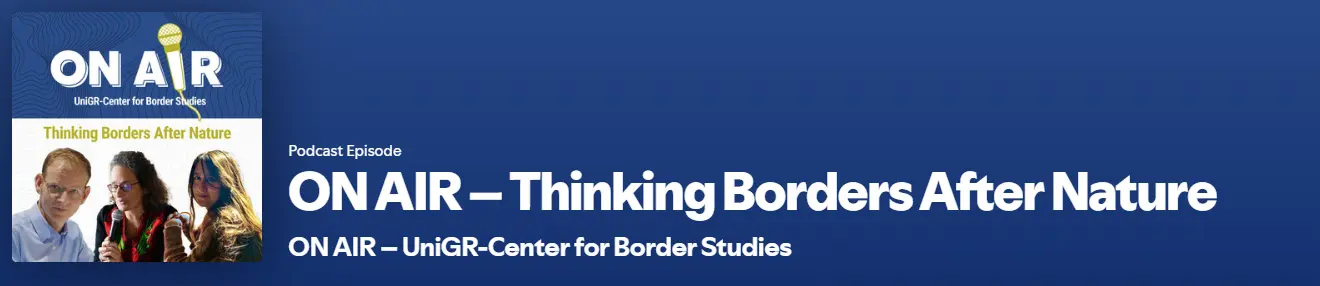
Der Abschlussvortrag der UniGR-CBS-Vortragsreihe „Border Realities: Beyond Nature and Culture“ (2024/25) wurde aufgezeichnet. Die Organisatorinnen Lola Aubry und Anne-Laure Amilhat Szary (Universität Grenoble) reflektieren darin die Hintergründe ihrer Forschungsarbeiten, verknüpfen zentrale Beiträge mit eigenen Forschungsansätzen und geben Ausblicke auf künftige Projekte.
Kontakt
Denise Rodrigues Marafona
Universität Luxemburg
denise.rodriguesmarafona@uni.luWissenschaftliche Leitung
Lola Aubry
Universität Luxemburg
UniGR-Center for Border StudiesAnne-Laure Amilhat Szary
Pacte, CNRS, Université Grenoble Alpes
- Border Realities 2023/2024: Crises, Resistances, Silences – Perspectives from the Border and Borderlanders
Die vierte Ausgabe (2023/2024) der Online-Vortragsreihe „Border Realities“ beschäftigt sich mit dem Begriff und Phänomen der Krise aus Sicht der Border Studies und Borderlanders.
Regierungen und die internationale Politik gehen davon aus, dass wir weltweit in den letzten Jahrzehnten in einen anhaltenden Krisenzustand eingetreten sind: eine Situation, die von angespannten internationalen Beziehungen, wirtschaftlichen Rezessionen, Migrationsströmen, Gesundheitsproblemen, Klimawandel sowie Kriegen und anderen gewaltsamen Konflikten gekennzeichnet ist. Vor diesem Hintergrund ist es dringlich sich näher mit dem Konzept und Phänomen der Krise, ihrer politischen Verwendungsweisen und Erscheinungsformen auseinanderzusetzen – insbesondere aus Sicht der Grenzforschung.
Die Online-Vortragsreihe versammelt daher Grenzforschende aus Geographie, Politikwissenschaften und Anthropologie, um Konzept und Phänomen der Krise zu analysieren und zu zeigen, wie diese die Multiplizität von Grenzrealitäten prägen, komplexifizieren und sich darin überschneiden. Die Vortragenden stellen verschiedene situierte Praktiken des Umgangs mit Krisen vor und tragen damit zu einem vertieften Verständnis dieses komplexen und mehrdeutigen Phänomens mit Blick auf Grenzen und Grenzgebiete bei. Dabei werden letztere als Kontexte, Orte oder Verflechtungen problematisiert, in denen sich unterschiedliche Krisen sowohl lautlos als auch rabiat materialisieren. In diesen Prozessen spielt die Krise der Grenzen selbst eine entscheidende Rolle.
Die nähere Betrachtung von Krisen der Grenzen und in Grenzgebieten wird zeigen, dass Grenzrealitäten für einen Beobachtungsstandpunkt stehen können, der Konzept und Phänomen der Krise neu zu denken und zu problematisieren erlaubt.
Die Online-Vorlesungsreihe 2023/2024 wird vom UniGR-Center for Border Studies (Universität Luxemburg) und dem Centre for Border Region Studies (Universität Süddänemark) organisiert. Sie ist öffentlich und richtet sich an Forschende, Studierende und an die interessierte Öffentlichkeit.
11/10/2023 | 16:00 Uhr – Eeva Kaisa Prokkola & Satu Kivela (Universität Oulu)
02/11/2023 | 16:00 Uhr – Rodrigo Bueno Lacy (Universität Ostfinnland) & Henk van Houtum (Radboud-Universität Nijmegen)
30/11/2023 | 16:00 Uhr – Astrid M. Fellner (Universität des Saarlandes)
14/12/2023 | 16:00 Uhr – Georgie Wemyss (Universität von East London)
16/01/2024 | 16:00 Uhr – Anne-Laure Amilhat Szary (Universität Grenoble Alpes)
08/02/2024 | 16:00 Uhr – Kolar Aparna (Universität Helsinki), Dorte Jagetic Andersen (Süddänische Universität), Lola Aubry (Universität Luxemburg), & Manju Sharma
Kontakt
Denise Rodrigues Marafona
Universität Luxemburg
denise.rodriguesmarafona@uni.luWissenschaftliche Leitung
Lola Aubry
Universität Luxemburg
UniGR-Center for Border StudiesDorte Jagetic Andersen
Süddänische Universität
Centre for Border Region Studies

- Border Realities 2022/2023 : Transformation der Grenzen und neue konzeptionelle Herausforderungen
Seit zwei Jahrzehnten ist ein Wiedererstarken von Grenzen zu beobachten. Das zeigt zum einen der bemerkenswerte Zuwachs an Grenzkontrollen, Grenzmauern und fortifizierten Grenzanlagen. Zum anderen zeigt das aber vor allem die fortschreitende Vervielfältigung von Grenzen: Sie dringen weit in die Breite der Gesellschaft vor, sie präsentieren sich in unterschiedlicher Gestalt und spannen sich räumlich zersplittert auf. Diese Transformation der Grenze ist mit der vertrauten Idee der Linie nicht mehr greifbar, sondern spiegelt sich in miteinander vernetzten Materialitäten, Lokalisierungen, Zeitlichkeiten, Körperlichkeiten, Diskursen und vielfältigen Wirksamkeiten wider. Diese neuen Formen der Grenze sind nicht nur für politische Akteure eine Herausforderung, auch Grenzforschende, die sich mit den veränderten Grenzrealitäten befassen, sind mit neuen konzeptionellen Herausforderungen konfrontiert.
Die Online-Vortragsreihe setzt hier an und will die Transformation der Grenze sowohl anhand von empirischen Fallstudien als auch konzeptionellen Fragestellungen diskutieren. Dafür eingeladen sind internationale Grenzforschende der Sozial- und Kulturwissenschaften, die eigene Forschungs- und Reflexionsergebnisse auf das rezente Wiedererstarken von Grenzen beziehen und ihre neuen Formen herausarbeiten.
Die Online-Vortragsreihe ist öffentlich und richtet sich an Forschende, Studierende und die interessierte Öffentlichkeit.
Organisiert vom UniGR-Center for Border Studies (Universität Luxemburg) und Centre for Regional and Borderlands Studies am Institut für Soziologie (Universität Breslau)
13/10/2022 | 16:00 Uhr – Gerhild Perl (Universität Trier)
26/10/2022 | 16:00 Uhr – Jarosław Jańczak (Adam Mickiewicz University / Europa-Universität Viadrina)
16/11/2022 | 16:00 Uhr – Łukasz Moll (Universität Breslau)
30/11/2022 | 16:00 Uhr – Anett Schmitz (Universität Trier)
07/12/2022 | 16:00 Uhr – Nina Sahraoui (CRESPPA, Paris, CNRS)
25/01/2023 | 16:00 Uhr – Dorte Jagetic Andersen (Süddänische Universität)
Kontakt und Organisation
Denise Rodrigues Marafona (Universität Luxemburg) info@borderrealities.org
Sylwia Zawadzka (Universität Breslau) sylwia.zawadzka@uwr.edu.plWissenschaftliche Leitung
Christian Wille (Universität Luxemburg)
UniGR-Center for Border Studies www.borderstudies.orgElżbieta Opiłowska (Universität Breslau)
Centre for Regional and Borderlands Studies www.obrop.uni.wroc.pl
- Border Realities 2021/2022: Zur Renaissance der Grenze in unsicheren Zeiten
Im Zuge der Pandemie wurden erstmalig seit der Nationenbildung die Grenzen von so vielen Ländern gleichzeitig geschlossen. Dieses Ereignis kann als (vorläufiger) Höhepunkt einer ganzen Reihe an territorialen (Selbst-)Versicherheitlichungen betrachtet werden, welche die in den 1990er Jahren aufgekommene Idee der „Borderless World“ in Frage stellt. Während damals unter dem Eindruck des sich ausbreitenden Internets, Falls des Eisernen Vorhangs, erhöhten Mobilität oder der globalen Klima- und Umweltfragen territoriale Grenzen scheinbar an Bedeutungen verloren, ist seit zwei Jahrzehnten eine Renaissance der Grenze zu beobachten.
Das Wiedererstarken von Grenzen geht vor allem auf jüngere Ereignisse zurück, wie der plötzliche Anstieg terroristischer Anschläge nach der Jahrtauendwende, die aufkeimenden Nationalismen, wachsenden sozialen Ungleichheiten oder die anhaltende Krise des Migrationsmanagements der westlichen Staaten. Sie haben nicht nur eine forcierte Digitalisierung der Grenzregime, temporäre Wiedereinführung von Grenzkontrollen im Schengen-Raum oder die Abschottung der EU-Außengrenzen bewirkt. Sie haben auch zu gesteigerten Ungewissheiten, sozialen Fragmentierungen und zu einer Vervielfältigung von Grenzanlagen geführt.
Diese Entwicklung legt nahe, dass wir sowohl im globalen Maßstab als auch in den Europäischen Grenzregionen in ein Zeitalter der Grenzen eingetreten sind. Die Grenzforschung ist vor diesem Hintergrund mit geeignetem Orientierungs- und Handlungswissen besonders herausgefordert. Darauf baut die mehrsprachige Vortragsreihe auf und bringt zum einen die Vielzahl der Themen und Ansätze des multiparadigmatischen Arbeitsfelds zusammen. Zum anderen werden Forschungsergebnisse zur Diskussion gestellt, die aus der Bearbeitung aktueller Probleme und Herausforderungen resultieren und die Signatur der Grenze tragen. Dafür eingeladen sind internationale Forscher*innen der raum- und kulturwissenschaftlichen Grenzforschung.
- 29/06/21 | 16.15 Uhr – Daniela Johannes (West Chester University of Pennsylvania)
Dust and Death: Politics of Nature at the U.S.-Mexico Border
Moderation: Astrid M. Fellner (UniGR-CBS, Universität des Saarlandes)
- 29/09/21 | 16.30 Uhr – Elżbieta Opiłowska (Universität Wrocław)
Determinants of cross-border cooperation in the Polish–German borderland
The German-Polish borderland belongs to new border regions in Europe. It was created after WWII as a result of the Potsdam Treaty. However, for over 40 years the cross-border contacts were limited to meetings of communist officials and strongly controlled exchanges of activities. Thus, border communities could hardly develop any transborder interactions until the fall of communism.
During the lecture I will trace the development of the bilateral cooperation between Germany and Poland in the borderland and address the following questions: Which factors particularly enhance and which inhibit the cross-border cooperation? What role do the EU and state actors play in the Polish–German bilateral relations in border regions? The talk is based on the evaluation of expert interviews and both Polish and German documents that was carried out within the research project "Poland and Germany in the European Union - new forms and models of bilateral relations in foreign policy and cross-border cooperation" funded by the Polish-German Science Foundation.
Moderation: Christian Wille (UniGR-CBS, Universität Luxemburg)
- 05/10/21 | 16.30 Uhr – Jussi P. Laine (University of Eastern Finland)
Counter-Europeanisation as a Security Challenge: Rebordering borderlessness
The European Union’s project of consolidating political community and its own international actorness have encountered formidable obstacles - partly due to global shocks and partly due to internal crises. In this process, borders have come to play a critical role as an interface between domestic concerns and wider interstate and intercultural contexts. As markers of difference, their role as barriers to undesirable influences and threats perceived to emanate from the other side have only been reinforced. Under pressure, a number of governments have opted for the end-of-pipe solution of closing their borders in an attempt to restrict the incoming or transiting movement of people, some succumbing to the knee-jerk reaction to build walls and fences. We have witnessed a consistent drive for ever stricter border and migration policies, which are not limited to mere border management but become an inherent part of a wide range of polices and societal practices. Accordingly, the success of Europeanisation, understood as the emergence of common rules, values, social agendas, etc., is no longer self-evident.
Moderation: Christian Wille (UniGR-CBS, Universität Luxemburg)
- 12/10/21 | 20.00 Uhr – Johan Schimanski (University of Oslo)
Temporalities and migratory border-crossings in literature and other discourse
Professor Schimanski presents the work he has been leading within the Joint Committee for Nordic research councils in the Humanities and Social Sciences workshop on temporalities and migratory border-crossings in literature and other discourse. He will also offer a more principled reflection on the working of borders and temporalities through the lens of border poetics.
Moderation: Machteld Venken & Christoph Brüll (UniGR-CBS, Universität Luxemburg)
In Kooperation mit der UniGR-CBS Arbeitsgruppe Border Temporalities
- 10/11/21 | 16.30 Uhr – Tracie Wilson (Martin-Luther-Universität Halle-Wittenberg)
Where Border Studies and More Than Human Worlds Meet
This talk explores the intersections of Border Studies with research that advances more than human, post-humanist, and new materialist perspectives. These approaches often expand concepts of agency, reject human exceptionalism, and stress the co-creative aspects of our experiences of “becoming with” non-human entities. Such orientations foster new ways to think about our connections to the natural world and can serve to validate affective and sensory experience. Yet, they also present certain challenges. Drawing on examples from my own research and the work of others, I consider the possibilities and limitations of these perspectives in addressing the making and un-making of borders and addressing matters of environmental justice.
Moderation: Antje Bruns (UniGR-CBS, Universität Trier)
- 17/11/2021 | 16.30 Uhr – Alexei Kiryukhin (V. N. Karazin Kharkiv National University)
Models of cross-border functional regions stability in the post-covid period for the purposes of territorial cohesion
- 18/11/21 | 14.00 Uhr – Joanna Kurowska-Pysz (WSB University)
The cross-border functional area as a new solution supporting territorial cooperation in the European Union – a case study of the Polish-Lithuanian borderland
- 18/11/21 | 16.30 Uhr – Hedwig Wagner (Europa-Universität Flensburg)
Les géo-médias à l'interface des sciences de géo- et des sciences des médias
Moderation: Grégory Hamez (UniGR-CBS, Université de Lorraine) and Angeliki Monnier (CREM)
- 06/12/21 | 16.30 Uhr – Peter Ulrich (Brandenburgische Technische Universität Cottbus-Senftenberg)
Die Grenze im Zentrum. Bedingungen für gelingende grenzüberschreitende Zusammenarbeit im Europa der Grenzregionen in unsicheren Zeiten
In den letzten Jahren ist eine Renaissance der Grenze(n) in den europäischen Grenzregionen zu beobachten. Doch bereits zuvor war die Grenze auch im Schengenland präsent - allerdings im Hintergrund und eher unscheinbar. Die Grenze wurde im Zuge des europäischen Integrationspozesses ins Zentrum gerückt, um ein “Europa der Grenzregionen” zu befördern mit zahlreichen euroregional-institutionellen Kooperationen über EU-Grenzen hinweg. Die Grenze als multidimensionale und komplexe Entität wurde hier als Ressource und Bedingung für grenzüberschreitende Kooperation verstanden. Im Vortrag wird auf diese Korrelation von grenzbezogenen Faktoren und auf grenzüberschreitende Kooperations- und Governance-Prozesse eingegangen – aus einer vor-pandemischen Perspektive und in Zeiten der Corona-Krise.
Moderation: Christian Wille (UniGR-CBS, Universität Luxemburg)
- 21/01/22 | 16.00 Uhr – Damien Simonneau (Institut national des langues et civilisations orientales)
The digitization of border security
Migration and border controls are heavily digitized, generating ethical, organizational and political challenges. The guest lecture will first present the literature in security studies that addresses this data turn and focus on preliminary analyses on the digitization of the post-Brexit EU-UK maritime border.
Moderation: Karina Pallagst (UniGR-CBS, TU Kaiserslautern)
- 21/06/2022 | Border Realities: Perspektiven aus der Ukraine (Universität des Saarlandes
In der Vortragsreihe "Der Krieg in der Ukraine - ein Krieg um 'Europa'" findet am Dienstag, den 21. Juni 2022 eine hybride Podiumsdiskussion zum Thema "Border Realities: Perspektiven aus der Ukraine" statt.
Zu den Diskutanten zählen:
Dr. Julia Buyskykh, National Academy of Sciences of Ukraine
New-Old Boundaries in Anthropology: Ukraine as European “Other” Dr. Alina Mozolevska, Petro Mohyla Black Sea National University
Borders, Emotions and Counter-Propaganda: Analyzing Visual Discourse of Ukrainian Resistance Prof. Dr. Oleksandr Pronkevich, Petro Mohyla Black Sea National University
Maps, Borders and Ukrainian National Identity Dr. Viktor Sklokin, Ukrainian Catholic University
Concept of Borders in the Russian Imperial Discourse21.06.2022
18:15 Uhr bis 19:45 Uhr
Universität des Saarlandes, Gebäude C7 4, Raum 1.17
Moderation: Prof. Dr. Astrid Fellner (Universität des Saarlandes)
Die Online-Vortragsreihe ist öffentlich und richtet sich an Forschende, Studierende und interessierte Praktiker*innen aus der Großregion und darüber hinaus.Arbeitssprachen: Deutsch, Französisch, Englisch
Kontakt: Denise Rodrigues Marafona (denise.rodriguesmarafona@uni.lu)
Vortragsreihe des interdisziplinären Kompetenzzentrums UniGR-Center for Border Studies

- Border Realities 2019/2020: Grenzwirklichkeiten: Herausforderungen und Perspektiven in ungewissen Zeiten
In Zeiten der COVID-19-Pandemie, im Zuge der so genannten ‚Flüchtlingskrise‘ und politischer Regulierungsregime rücken Grenzen immer stärker in den Fokus. Durch sichtbare und unsichtbare Linien regulieren sie die Beziehung zwischen Innen und Außen, Inklusion/Exklusion und Orte der Zugehörigkeit.
Auch für den regional-lokalen Kontext spielen diese Themen eine wichtige Rolle: Insbesondere in der Großregion sind grenzüberschreitende Lebenswirklichkeiten ausgeprägt. Im Jahr 2017 verzeichnete die Großregion mehr als 230.000 Grenzgänger_innen. Rund 40.000 von ihnen überqueren täglich die Grenze zwischen Deutschland und Luxemburg
Ziel der interdisziplinären Vortragsreihe von 12/2019-12/2020 ist es, die wissenschaftliche Debatte über physische und ideelle Grenzräume zu untersuchen, um Studierende und Wissenschaftler_innen der Großregion für Grenzen und ihre Herausforderungen aus kultureller, politischer und historischer Sicht zu sensibilisieren.
Programm und weitere Informationen hier
Organisator_innen der interregionalen Vortragsreihe
Anett Schmitz (Universität Trier)
Astrid Fellner (Universität des Saarlandes)
Christian Wille (Universität Luxemburg)Interregionale Vortragsreihe im Rahmen des Netzwerks UniGR-Center für Border Studies mit Unterstützung der Universität der Großregion.